Payment gateway failure scenarios are the cases where checkout does not return a clean success or decline: timeouts, partial approvals, duplicate webhooks, and provider downtime. Testing them before launch shows whether your app can pause fulfillment, retry safely, and recover without losing orders.
went well. Checkout worked, payments processed, orders came through. Then, a few days after launch, a customer emailed. Money had left her account. No order. No confirmation. Nothing.
The code was fine. The gateway was online. What had failed was something nobody had thought to test — a payment request that left the server, reached the gateway, and never got a reply. The connection dropped somewhere in between. Just for a second. Just long enough.
That's usually how it starts.
These aren't bugs — they're gaps
When a payment is declined, your application gets a clear answer. The gateway said no. The customer sees an error. They try again or they don't. Clean result, handled correctly.
The situations that cause real problems are different. They're the ones where your application sends a request and gets nothing back. No success. No failure. Just silence.
Did the charge go through? Did the gateway even receive the request? You don't know. The customer doesn't know. The order is somewhere between created and not-created, and the only way to find out is to log into the gateway dashboard and check manually.
This is the gap most payment integrations aren't built to handle — not because developers don't care, but because it's hard to test something you've never seen fail.
The failure scenarios worth knowing before you go live
A connection dropping mid-request is just one of them. Here are the others that tend to show up in production.
Some banks approve a smaller amount than what you charged and still return a success response. So your code sees "success," fulfills the order, and nobody notices the shortfall until the month-end numbers don't add up.
Gateways resend payment events when your server doesn't reply fast enough. Most of the time this is fine — but if your code doesn't check whether it's already processed an event, it runs twice. Two orders. Two emails. One very confused customer on the other end.
And then there's downtime. Providers go offline sometimes. When that happens, the real question isn't just whether to show an error — it's whether the payment gets queued and retried later, or quietly lost.
What a payment system that handles this looks like
Building for these situations is called fault tolerance. The idea is simple: instead of assuming everything will work, you plan for what happens when it doesn't.
For a timeout, that means not guessing. Put the order in a pending state. Log what happened. Check the transaction status separately — either right away or in a background job. When you retry the request, send the same transaction ID so the gateway knows it's the same charge and not a new one.
For a partial approval, it means reading the actual amount the gateway approved — not just the status field. If the approved amount is less than the order total, stop. Don't fulfill the order.
For duplicate webhook events, it means saving the event ID the first time it arrives and checking for it before doing any work. If the same ID comes in again, tell the gateway you received it — so it stops retrying — but don't process it a second time. This is called idempotent handling, and it's one of the few patterns in payment development that has a specific name because it causes so many incidents when it's missing.
For downtime, it helps to have a circuit breaker in place. When the gateway keeps failing, stop sending requests for a short window instead of flooding it with retries. Queue the transactions. Process them once it's back. Customers get a real message. Nothing disappears quietly.
Why these are hard to test in a real sandbox
Most provider sandboxes don't make these scenarios easy to reproduce. Testing a timeout means intercepting a live connection at exactly the right moment. Testing a partial approval means finding a specific test card buried somewhere in the docs. Testing duplicate webhook handling means either waiting for a real gateway retry or calling your own endpoint by hand, which defeats the point of an automated test.
Under launch pressure, that work gets skipped. These scenarios end up on a "we'll handle it when it comes up" list — which is really just a list of future incidents.
How MockGateway helps you test payment failures before go-live
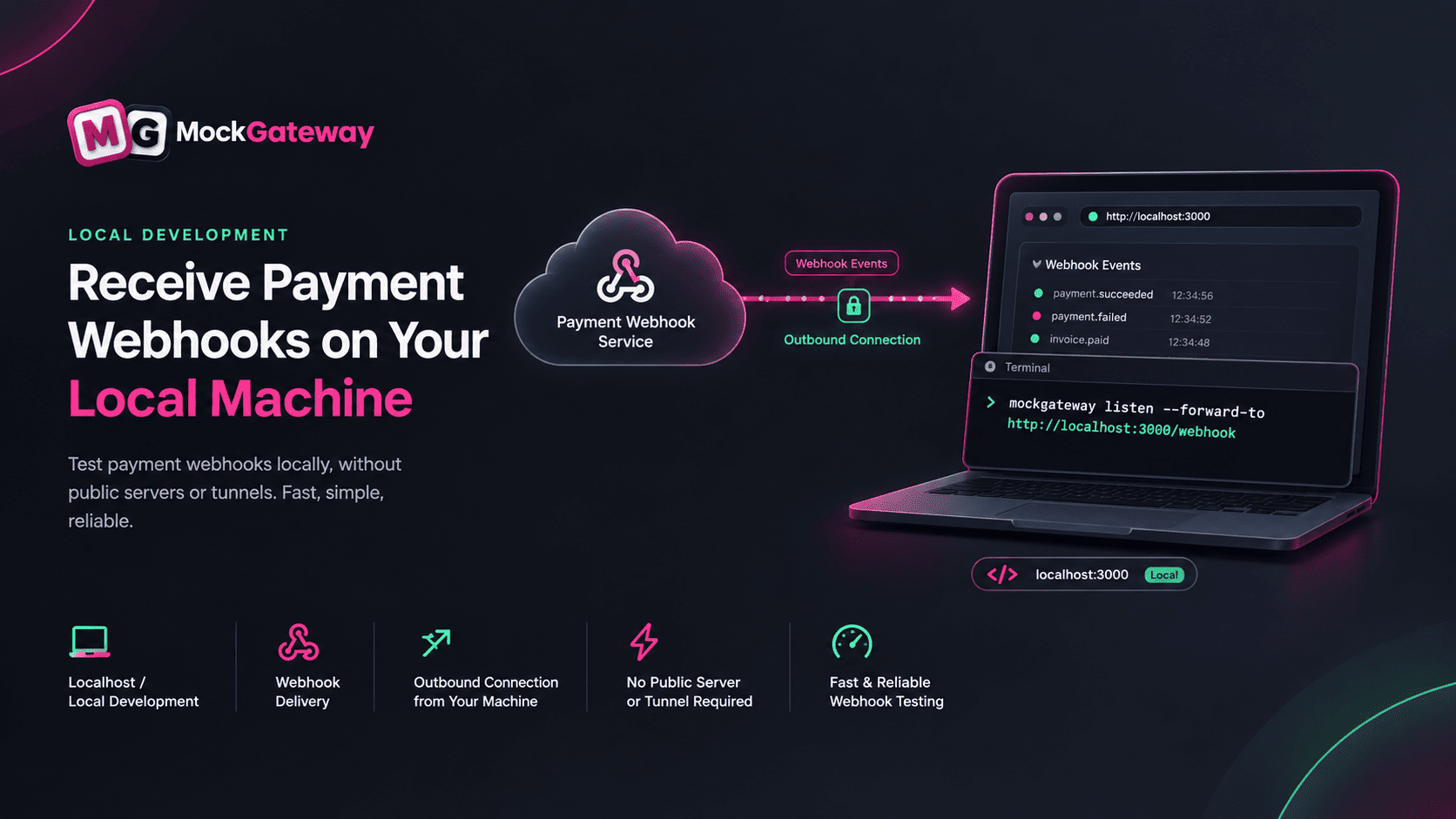
MockGateway provides fixed outcomes for each supported gateway. Choose one, run a test payment, and inspect the response, redirect, and webhook log. Each webhook event is delivered once; failed deliveries are not retried.
Select "timeout" and the connection drops with no response. You'll see right away whether your code moves the order to a safe pending state or fails silently. Set a partial approval amount and check whether your handler reads the actual amount or just the status field. Fire the same webhook event twice and confirm only one order gets created. Return a 503 and watch whether the transaction queues properly or disappears.
You can also test recovery — bring the gateway back up and check that queued transactions process correctly. That's the step most teams skip entirely, and it's where silent data loss usually hides.
Each failure mode, each recovery path — one click away, before your first real transaction runs.
The cost of finding out after launch
Before launch, fixing a timeout handler takes a few hours. After launch, the same fix means going through real transactions, identifying which orders are stuck, issuing refunds where needed, and following up with the customers who were affected.
Payment reliability isn't something you can add after the fact. The payment gateway failure scenarios covered here — timeouts, partial approvals, duplicate events, gateway outages — are part of how payment processing works. Building a fault-tolerant checkout means testing each one before a real customer runs into it, not after.
Tagged with
Found this helpful?
Share it with your network.